'The Blonde versus Murdoch'
A remarkable woman on the front line - Brenda Dean

One of the messages from International Women’s Day this year was please, let’s not make this just another day of tokenism and performativity. Every day is for women everywhere to be safe and given equal rights and respect. Like World Book Day, every day is an opportunity to be that reader, or colleague or neighbour, and take action beyond the soundbites and hashtags. A remarkable woman I’ve been researching is Brenda Dean, who took a lead role in the first British International Women’s Day in 1975…
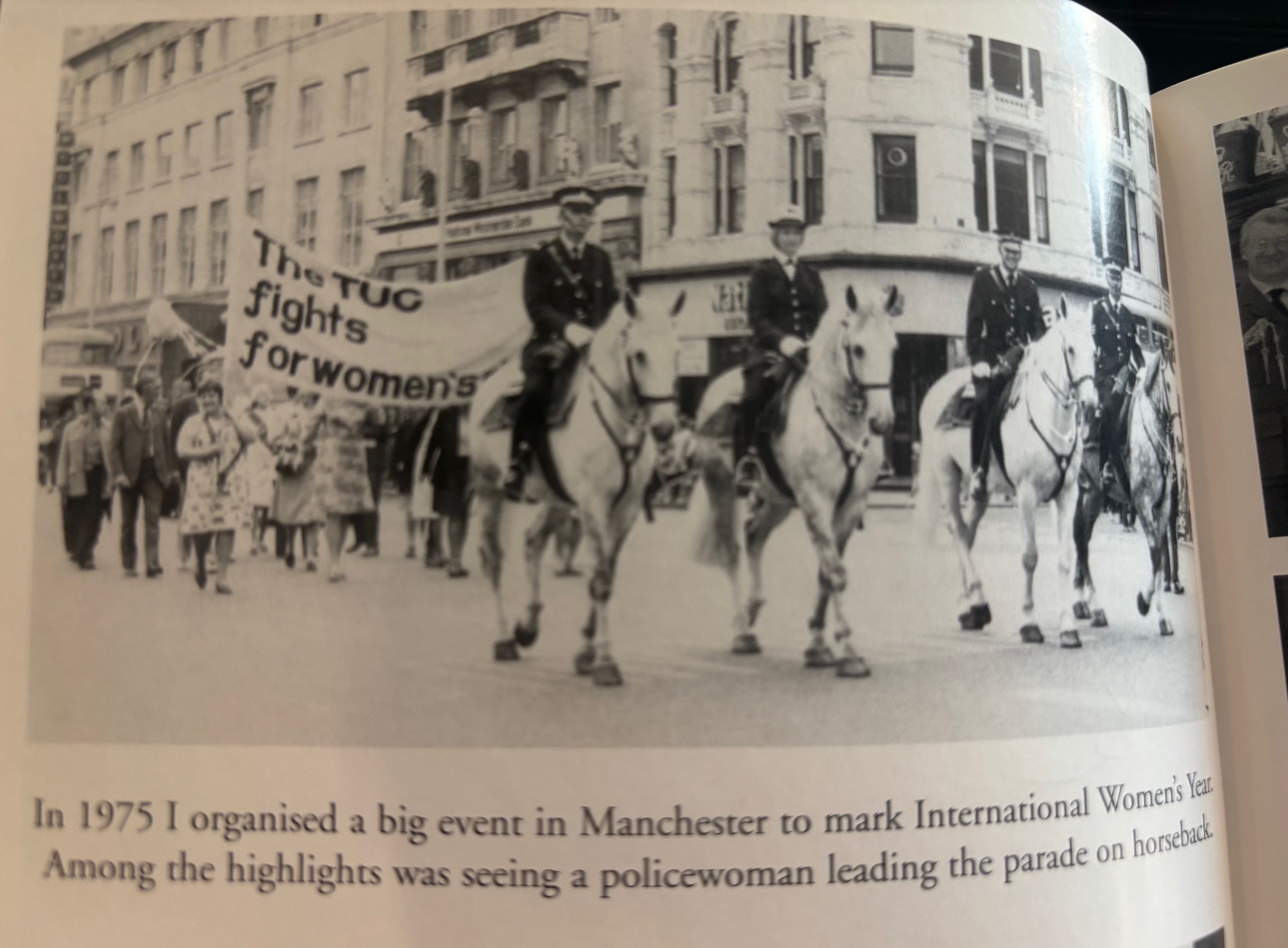
She pushed for the parade through Manchester that day to be led by female cavalry – this was the first public appearance of a policewoman on horseback. Dean was the UK’s first leader of a major trade union, and remains one of the most significant industrial leaders in history. She understood substance as well as presentation, helping her in the fight to come and its newly explosive media glare.
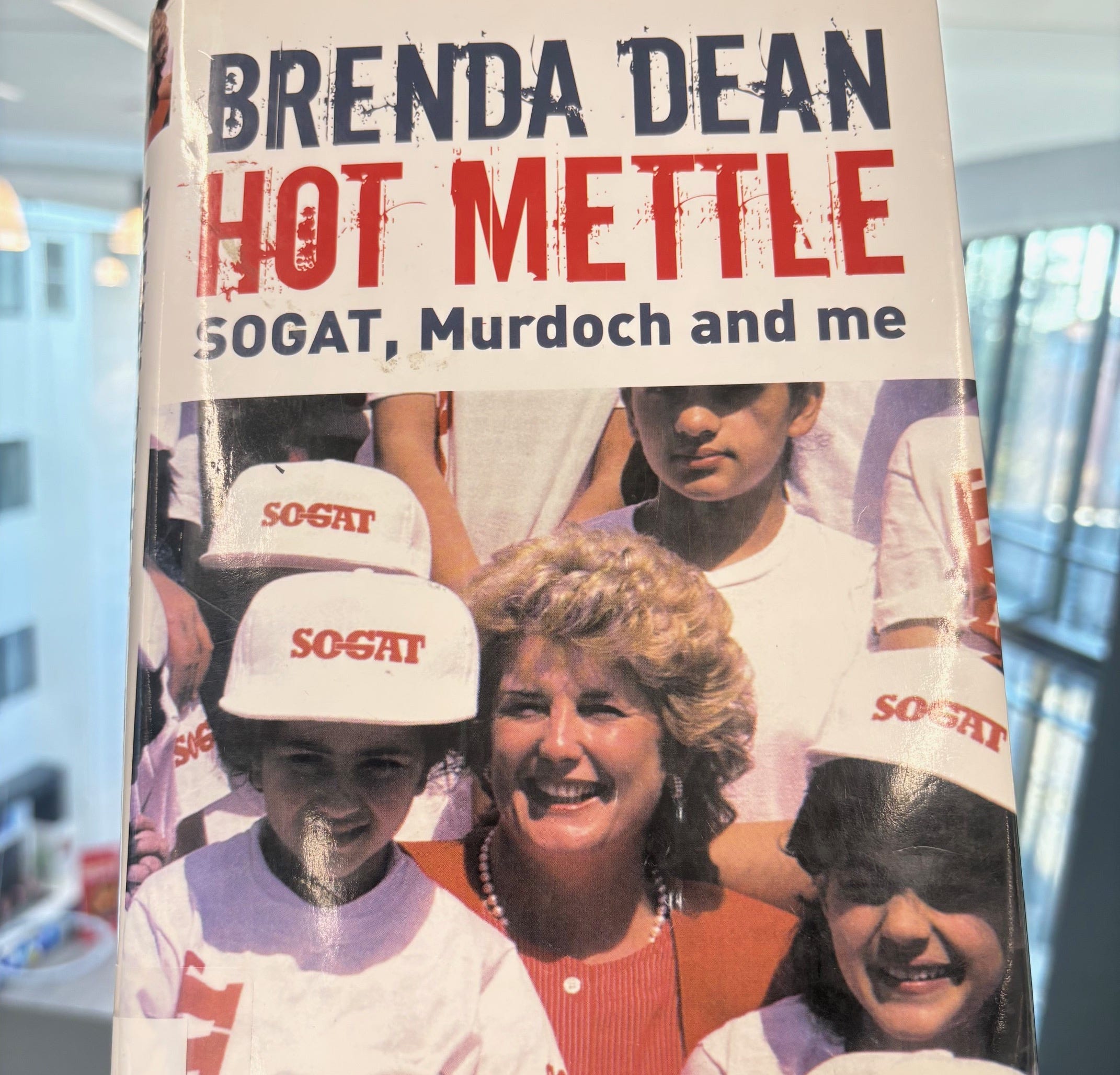
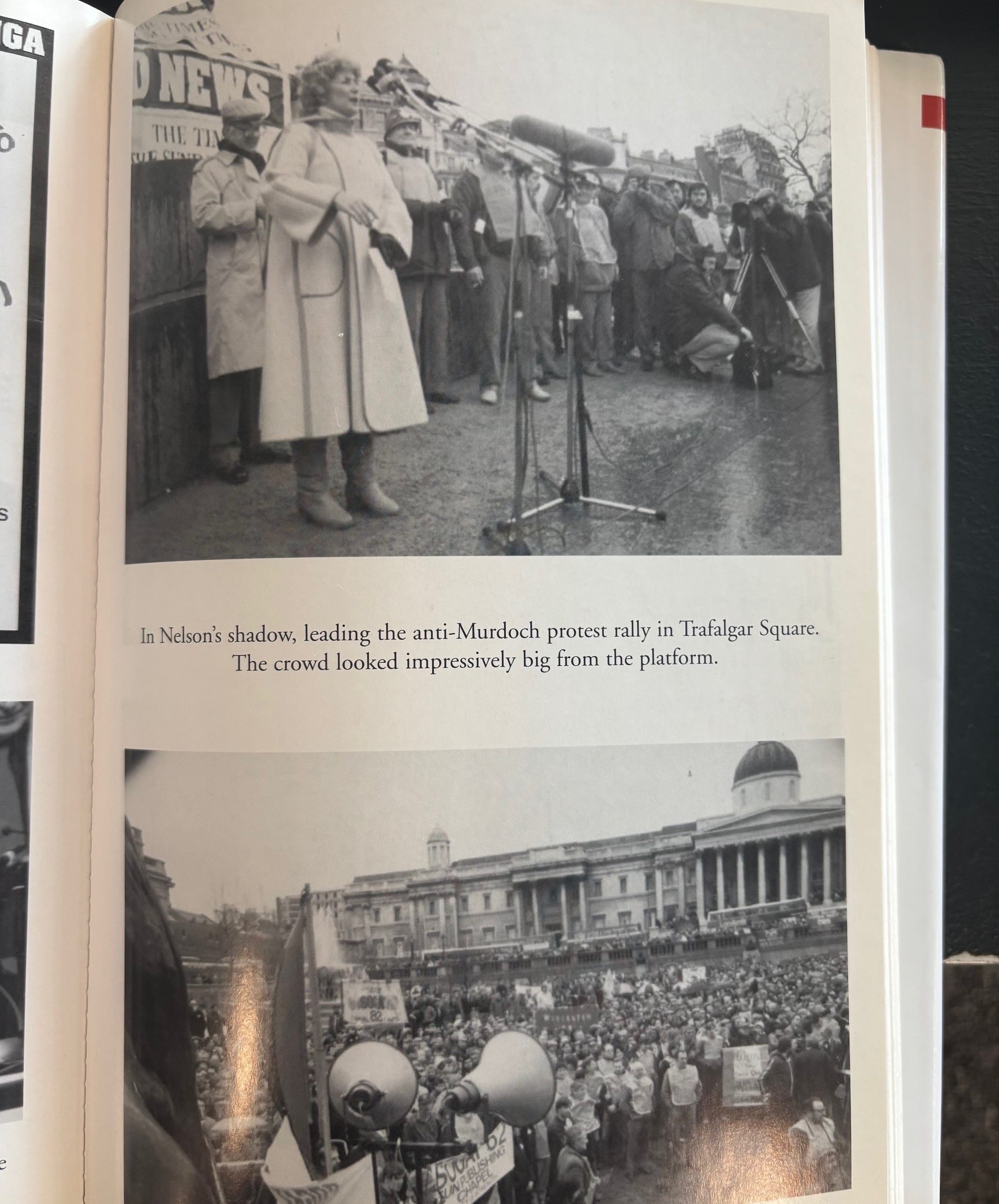
Forty years ago, over 54 weeks from January 1986, as leader of the print union SOGAT, Brenda Dean took on Rupert Murdoch and News International in a bitter fight for jobs that was Britain’s last major scale industrial action. A working-class Lancashire lass, proudly so, she was billed in sexist terms as ‘the Blonde’, and rose to become a Labour Party peer in the House of Lords. She was bullied as a ‘Judas’ in ‘film star’ guise, but widely respected for her sense of justice, her management and leadership, and the strong will that powered through her ‘Brenda agenda’.
Hot Mettle: SOGAT, Murdoch and Me is a riveting account of her career, including the long crisis of 1986 when the digital revolution tore through the old newspaper businesses of Fleet Street. In January 1986, 5,500 print workers were sacked overnight by News International, as its main papers The Times, Sunday Times, The Sun and The News of the Worlds had covertly moved to state-of-the-art premises at Wapping, in London’s Docklands. At first glance, these key events make a clear-cut story of victim and aggressor. But while it was undoubtedly a kick in the teeth for newspaper staff – from print machine workers to cleaners to librarians to messengers to telephonists to ‘telead girls’ to circulation reps – it was a much messier and more complicated process on the inside. Powerful unions had evolved shady practices and, albeit to compensate toxic working conditions, they had negotiated well for themselves. Possibly too well, in the face of technological change then unfolding, as 500 years of hot metal plate printing was rapidly succeeded by desktop computers, with direct text input, and digital printers.
It was a scenario laced with desperation from the start, as a large workforce clamoured to remain in place while the shape of work irrevocably changed, and journalists, among the most able (back then!) to find a position elsewhere, pinioned on tough moral divides. Thatcher’s government had imposed heavy constraints on the unions, for example prohibiting cross-union support, which the miners’ strike of the previous year had drawn morale from. The print strikes, following the nationwide shake-up from the miners’ defeat, was a historic and symbolic moment of rupture that launched the era of digital media, and is the starting-point of my PhD. It’s not quite Murdoch to Musk (with the long view of Gutenberg to Zuckerberg), but given that the figure of media magnate / diabolical visionary features so heavily in the fabric of our lives, arguably more than any other kind of leaders, this pop alt subtitle keeps springing to mind.
The fact that Brenda Dean was a woman, and a woman not from London, but from the North, the regions, shaped how people saw her and how she approached her mission. She braced herself to steer and communicate despite ‘the testosterone among the London print workers, who loved a fight.’ She was well aware of the legendary glamour exuding from the capital city and Fleet Street, and of the higher equity London homeowners held simply by geographical accident. A London print worker, whose energy was fuelled by the hundred pubs on Fleet Street and served by all-night trains running from Blackfriars, had a very different set of pay demands and expectations to regional workers. Dean was also at pains to meet the needs of her entire union’s membership, who were not all in newspapers, but in other areas of printing like packaging and book-binding. They were based all over the country, and did not have the print workers’ power to stop the papers for a night (or longer), depriving the public of news and the proprietor of turnover to run the operation. They had wielded this power to put newspaper groups in jeopardy often, and Murdoch and Thatcher determined, brutally, to end it.
Media, government and colleagues quickly learned not to underestimate Dean, but she was still bullied and derided in headlines pitting her as ‘the Blonde versus Murdoch’, and subject to routine intimidation tactics in the workplace and public life. ‘If you’re doing a man’s job, you’ll bloody have a man’s drink,’ she was told, but she turned down the whisky and got on with the job. She also turned down the offer of VIP tickets to Wimbledon from Robert ‘Call me Bob’ Maxwell (and did not call him Bob; she instinctively loathed Robert Maxwell). She also, probably to the detriment of her union, refused to negotiate with Murdoch singly, behind the back of rival/comrade unionists. These are the kinds of principles she lived by and which seem to mark her as from another era of fair dealing and transparency.
Another fascinating fact I learned from Dean’s autobiography is that the electricians’ union, the EETPU, defected to Wapping early on in the strikes, strengthening News International’s set-up and weakening the union’s base. A parallel today might be the shift in the jobs market from coding and software skills (supplanted by AI) to data centre construction. We may always need cables (and pipes laid by plumbers). The print workers missed more than one opportunity to strike a deal with Murdoch, holding out for a better one that never happened. But even if they had accepted compensation and/or forfeiting their union powers in exchange for employment at Wapping, it’s very difficult to see another outcome in the big picture. Media corporations were conglomerating and scaling up on the back of tech efficiencies and reduced staff.
Before the digital era, people’s footprints disappeared like yesterday’s chip paper. I wonder what happened to this unique tribe of print men (and they were mainly, perhaps entirely, men in the print machine rooms)? They combined artisanship with manual labour, had the charisma to confront powerful editors like Kelvin Mackenzie and Andrew Neil and proprietors like Murdoch and Maxwell, and knew how to spell ‘rhombus’ and ‘Djibouti’ and lay a word count in a limited space with visual precision and no compromise to grammatical sense. In a conversation with Linda Melvern, author of The End of the Street, she mentioned to me that one of them became a bin man. If anyone has light to shed on this, or comments to make, or references to share, I would love to hear.
Revisiting the story of the print strikes gives a close view of how radically society and media have changed in a generation. I am looking forward to seeing this play about it at the Kings Head Theatre, Islington, on now and until May 2nd.
Thank you for reading, following, correcting me if mistaken, and subscribing!
Thank you for sharing this insightful essay. I knew none of this. Nor do I know what came of these people - dedicated to a craft that washed away. I’ve known a couple of folks who have acquired these older printing presses to produce print materials with a pleasing throw-back aesthetic. I wonder if they might know…
What this makes me wonder is whether there are lessons we should be learning from Dean regarding how to support a current “craft-worker” class while acknowledging that technology changes are upon us.